

Race Master 3D: Car Racing review
 Analysis by GetAllApps
The first thing I notice about Race Master 3D: Car Racing is how quickly it gets to the point: a short burst of driving, a tight track, and a clear reason to try again. It is a free racing game from Beresnev Games, built around drifting, nitro and head-to-head progress rather than a long simulation career. That focus makes it easy to pick up when I have a few spare minutes, though it also means the appeal depends on enjoying compact, repeatable races.
Quick races with a strong visual identity
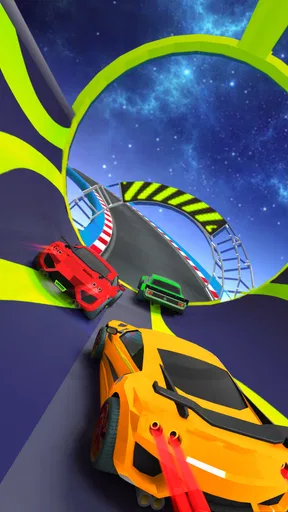
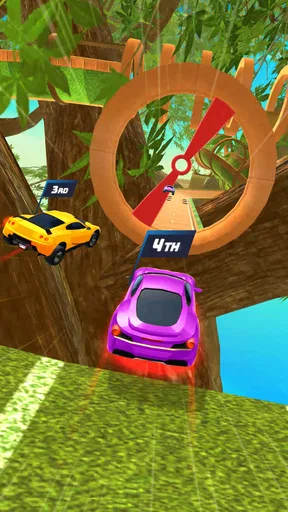
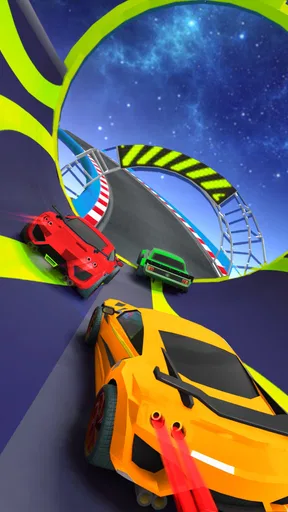
The game’s presentation gives its racing a bright, arcade-like mood. Cars and tracks are designed to read clearly at speed, so the action feels immediate rather than grounded in realistic road driving. I find that useful on a phone: the visual language helps me follow the course and react without needing to study a complicated dashboard or learn a detailed vehicle model.
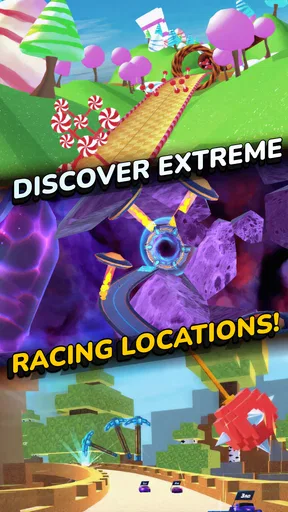
The setting is less about building a believable motorsport world and more about keeping each run visually lively. The tracks are the focus, with turns and obstacles shaping the experience as much as the car itself. This suits the game’s short-session format, but players looking for a convincing racing venue, realistic scenery or a story-rich career may find the world too lightweight.
That distinction matters when choosing between this and a conventional racing game. Race Master 3D is closer to an arcade challenge than a driving simulator: it rewards quick decisions and a feel for the course, not careful tuning of a realistic car setup. I would choose it for a quick, colorful race, but look elsewhere for detailed handling, licensed motorsport atmosphere or long-form competition.
Why the races feel brisk
The pacing is one of its most practical strengths. A race can fit into a short break, and the straightforward premise makes it easy to return without needing to remember a complicated objective. The store summary points to drifting, nitro, upgrades and boss battles; together, those elements give the quick races a sense of forward motion beyond simply repeating the same drive.
That briskness can also be a limitation. If you enjoy settling into long races where tire choice, braking points and small setup changes matter, the compact arcade approach may feel thin. I see the best fit as someone who wants an accessible racing game to dip into, not a replacement for a deep console-style racer.
Sound and the feeling of speed
Audio matters in a game built around brief bursts of acceleration, because sound helps give a run its momentum. Here, the overall mood is energetic and uncomplicated, matching the bold visual presentation rather than trying to create the hush and tension of a realistic circuit. The result is easy to understand: the game wants me focused on the next turn and the next burst of speed.
I would treat the sound as part of the arcade flavor, not as a reason to choose the game on its own. If I am playing in a quiet place, I can still follow the action visually; if I want a more immersive racing atmosphere, headphones and a game with a more detailed simulation style may be a better match. The appeal here is the quick rhythm of play, not an elaborate soundscape.
Drifting, nitro and useful upgrade choices
The driving idea is approachable, but timing still gives it texture. A drift is not just decoration: it is part of the game’s racing identity, and learning when to commit to a turn can make a run feel more controlled. Nitro adds another decision point. Rather than using it automatically whenever it is available, I would save a boost for a straight or a moment when recovering speed can help preserve a clean run.
That is a small but useful habit for anyone starting out: focus first on reading the track, then use acceleration tools with intention. Trying to drift and boost at every opportunity can make a run feel frantic. A calmer approach helps reveal whether a mistake came from entering a bend too quickly or spending nitro at the wrong moment. It also makes retries feel like practice rather than pure repetition.
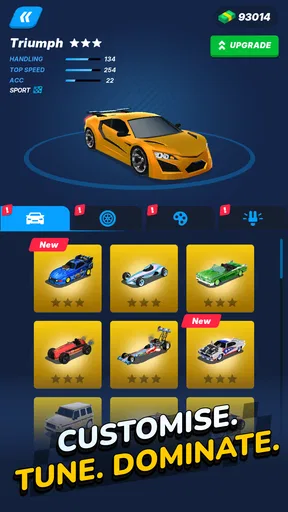
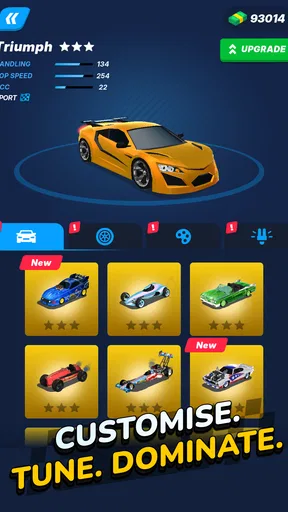
Upgrades give progression a practical purpose, but I would avoid treating every improvement as equally urgent. When a race exposes a specific weakness—such as struggling to maintain pace after a turn—it makes sense to prioritize the upgrade that seems most relevant, rather than scattering progress across everything. This keeps the upgrade loop tied to how the car feels in play and gives each attempt a clearer goal.
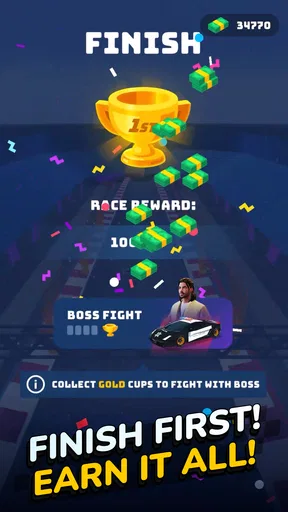
Boss races add a more distinct milestone to the progression. They provide a reason to improve and return, rather than making every event feel interchangeable. Still, players who prefer a large menu of modes or a detailed competitive ladder should keep their expectations measured: the core pleasure is the immediate race and the steady push toward the next challenge.
Playing in short breaks and offline
The game’s store summary highlights offline racing, which is a meaningful advantage for a commute, a flight or a place with unreliable reception. I like that kind of flexibility in a mobile racer: it means a brief session does not have to depend on finding a strong connection first. For an everyday use case, it fits the moment when I have a few minutes to fill and want to complete a race rather than manage a longer online session.
Offline play is not the same thing as a deep, endlessly varied solo campaign, so I would choose it for convenience rather than assume it will satisfy every racing mood. If I want live competition against other players or an ongoing social scene, an online-focused alternative is more suitable. If I simply want a self-contained burst of driving, the offline option makes this game easier to keep on hand.
It is also a good option for younger players in broad terms: the content rating is Everyone. Adults should still remember that free-to-play games can include optional purchases. In this case, in-app purchases range from $0.99 to $28.99 per item, so I would check purchase settings before handing a device to a child. The game itself costs nothing to start, but that does not mean every optional purchase is necessary for enjoying the races.
Who is likely to enjoy it
I would recommend Race Master 3D to players who like bright arcade racers, quick retries and simple goals that are easy to understand. It is particularly convenient for people who want a racing game that can work in short sessions and can be played offline. If your favorite part of a racer is learning a course through repeated attempts, using drift and nitro more thoughtfully, and gradually improving a car, there is a clear loop to follow.
I would skip it if you want realistic vehicle handling, lengthy races, elaborate car customization or a strong sense of place. Those are not small preferences: they change what makes a racing game satisfying. A more simulation-oriented racer is the better choice for careful braking and realistic driving; a multiplayer-first game is better if competing with friends or strangers is the main attraction.
There is also a difference between enjoying the game’s pace and enjoying its repetition. The same direct structure that makes it easy to play can become predictable if I sit down expecting a long evening of varied racing. I get more out of it when I treat it as a compact arcade game, set a small goal for a session and stop once the quick-race loop starts to feel familiar.
Availability and overall value
Race Master 3D is free, rated 4.6 on average from around 3.5 million ratings, and has passed 500 million installs. Those figures show that it has reached a very large audience, but popularity alone does not tell me whether its style will suit a particular player. The key question is whether you want fast, accessible arcade races or a more realistic and varied racing experience.
It was released on April 29, 2021, and its current version is 3.18.7.3579. The listed minimum operating system is Android 7.1, which is useful to check before installing on an older Android device. The game has around 11,000 written reviews, and its age rating is Everyone. Those details make it easier to judge basic compatibility and audience, while the optional purchases are worth bearing in mind if you prefer to keep spending tightly controlled.
A focused arcade racer, not a simulator
My overall impression is that this game knows the kind of mood it wants: bright, fast and easy to return to. Its visual style, short pacing and emphasis on drift and nitro fit together, while upgrades and boss challenges give the driving a modest sense of progression. I appreciate the convenience of offline racing most when I want entertainment without committing to a long session.
The trade-off is that its focused formula may not offer enough depth for players who want realism, extensive modes or a detailed racing world. For everyone else, it is an approachable way to make a spare few minutes feel like a quick arcade challenge. I would give it a try if that is the kind of racing I am after, keep purchases optional, and judge it by whether its brisk rhythm stays fun after the first few races—not by expecting it to be a full racing simulator.
Pros and cons
Pros
- Quick races make the game easy to enjoy in short sessions.
- Simple controls are accessible to players of different skill levels.
- Changing tracks keep the racing action from feeling too repetitive.
- Car upgrades offer a clear sense of progression.
- Colorful visuals make the races easy to follow.
Cons
- Frequent ads can interrupt play between races.
- Racing offers limited depth for players seeking realistic simulation.
- Some upgrades may take considerable time to earn.
- Track hazards can make outcomes feel unpredictable.
- The game depends on an internet connection for some features.


